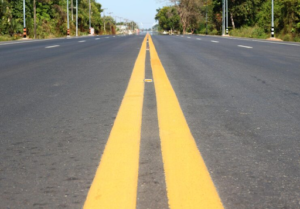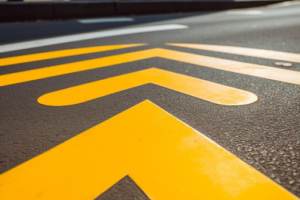
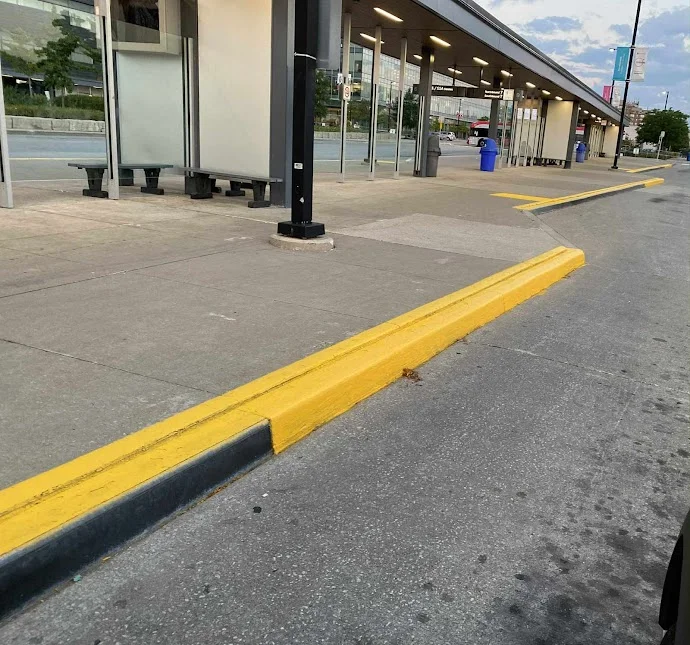
Clear curb markings help identify parking, loading, accessible, restricted, and other designated areas, but the meaning of each colour can vary by property, municipality, and approved traffic plan. The curb markings colour should therefore work with signs, pavement markings, and local requirements so drivers can understand where they may stop, park, load, or keep an area clear.
Knowing how different curb colours are commonly used, how they support traffic control, and when markings need repainting can help property owners avoid confusing layouts, while professional curb painting services in Ontario can ensure the markings are properly planned, prepared, applied, and maintained.
Key Takeaways
- Curb colours should match a clearly defined site function.
- Colour alone does not establish every parking or stopping restriction in Ontario.
- Signs, symbols, pavement markings, and curb paint should communicate the same instruction.
- Accessible and EV parking areas require more than a painted curb.
- Faded or conflicting colours should be corrected before they become difficult to interpret.
What Does Curb Markings Colour Mean in Ontario?
Curb markings colour can identify a boundary, caution area, parking function, loading zone, emergency access area, or specialty space. Ontario does not use one simple province-wide curb colour chart for every public road and private property, so drivers should also follow posted signs and applicable parking rules.
For anyone trying to understand curb markings’ meaning, colour is part of a larger traffic control system. Signs, arrows, symbols, and local rules provide context.
| Curb Colour | Common Application | What to Confirm |
| White | General boundaries, passenger areas, or designated stopping areas | Signs, pavement wording, and site purpose |
| Yellow | Caution areas, loading areas, restricted edges, or traffic control | Local restrictions and approved layout |
| Red | Fire routes, emergency access, or restricted areas where approved | Fire route designation and required signs |
| Blue | Accessible parking areas or related accessibility markings | Accessible parking signage and approved dimensions |
| Green | EV charging, bicycle, pickup, or specialty areas | Signs, symbols, and designated use |
| Black | Covering obsolete paint or improving contrast | Complete coverage of conflicting markings |
What Most People Get Wrong About Curb Colours
Many online charts about coloured curb markings assign one fixed meaning to every colour. That can be misleading because restrictions may depend on municipal bylaws, property rules, signs, and approved drawings.
How Should Drivers Interpret Curb Markings?
Drivers should identify the curb colour, then check nearby signs, symbols, arrows, wording, and stall markings. Paint may highlight a restriction without explaining every condition.
Use this sequence:
- Check the curb. Identify whether the section is intentionally marked.
- Read nearby signs. Look for parking, loading, fire route, accessibility, or time restrictions.
- Review pavement markings. Check symbols, arrows, stall lines, hatching, and wording.
- Consider the location. Entrances, hydrants, loading doors, and crossings may have specific controls.
- Follow applicable rules. Municipal bylaws and property restrictions can differ between locations.
Consistent colours, arrows, lines, and symbols help drivers understand how to move through a site, while clear pavement marking meanings support safer and more organized traffic flow.
Where Are Curb Markings Commonly Used?
Curb markings are commonly used in parking lots, commercial properties, industrial sites, schools, hospitals, municipal facilities, and other areas where vehicle movement, pedestrian access, loading, and parking need clear visual guidance.
Parking Lots
Effective curb markings for parking help distinguish special-use areas from regular stalls and travel aisles. Curb colours should coordinate with stall lines, accessible symbols, directional arrows, pedestrian routes, and parking signs.
Curb work can also be combined with parking lot line painting to create a more consistent layout across the property.
Loading and Delivery Zones
Loading areas often use curb markings to show where delivery vehicles may stop and where nearby access should remain clear. Clear boundaries can help separate delivery activity from customer parking and pedestrian routes.
Passenger Pickup and Drop-Off Areas
Pickup and drop-off zones benefit from visible curb markings that help drivers identify where short-term stopping is expected. These areas are especially useful at schools, hospitals, offices, and public facilities with frequent passenger movement.
Fire and Emergency Access Routes
Curb markings can reinforce areas that need to remain clear for emergency access. Paint should support the approved fire route layout and work with any required signs or pavement wording.
Accessible Parking Areas
Curb paint can help make accessible parking areas easier to identify, but it should support the complete accessible layout. Signs, access aisles, pavement symbols, and pedestrian routes should remain clear and consistent.
Commercial and Industrial Sites
Commercial and industrial properties may use curb markings to separate customer parking, truck routes, loading areas, restricted access points, and pedestrian spaces. Clear visual boundaries are particularly useful where several vehicle types share the same site.
Schools, Hospitals, and Public Properties
Schools, hospitals, and public facilities often serve drivers, pedestrians, buses, service vehicles, and emergency vehicles at the same time. Consistent curb colours, signs, and pavement markings can help clarify pickup areas, crossing points, service zones, and restricted spaces.
How Should a Curb Colour System Be Planned?
A practical curb markings colour system begins by identifying what each curb section needs to communicate. Review traffic movement, parking, emergency access, pedestrian routes, accessibility, loading activity, and existing markings before choosing colours.
Step 1: Review the Property Layout
Map entrances, exits, parking stalls, loading areas, pedestrian routes, hydrants, and emergency access. Compare conditions with the approved site plan where available.
Step 2: Confirm Requirements
Review municipal bylaws, fire route requirements, accessibility provisions, parking controls, and project drawings before assigning colours. Complex sites may also need road marking services in Ontario to coordinate arrows, crossings, islands, and lane lines.
Step 3: Assign One Purpose to Each Colour
Use each colour consistently for the same approved function across the property.
Step 4: Coordinate Other Markings
Signs, stencils, arrows, symbols, stall lines, and curb markings should reinforce one another.
Step 5: Remove Conflicting Paint
Remove or cover old colours before applying the new layout so outdated markings do not compete with new instructions.
Step 6: Inspect From Driver Level
Review the markings from each approach because parked cars, landscaping, corners, and shadows can change visibility.
How Are Curb Markings Applied?
Curb painting involves layout confirmation, surface preparation, application, and inspection. Material choice depends on the surface, existing coating, expected wear, weather, and project specifications.
A typical process includes:
- Confirm colours and locations.
- Inspect the curb and existing coatings.
- Remove dirt, salt, dust, and loose material.
- Remove or cover obsolete markings.
- Apply the selected coating evenly.
- Inspect coverage, colour, and alignment.
- Allow sufficient drying before normal use resumes.
Proper pavement paint application depends on surface condition, suitable materials, weather conditions, and careful preparation to support clear, durable markings.
When Should Curb Markings Be Repainted?
Repaint curb markings when fading, peeling, damage, or conflicting colours make their purpose difficult to recognize. Traffic, sunlight, snow clearing, salt, moisture, and curb condition affect deterioration.
Signs that maintenance is needed include:
- Faded colour
- Peeling or flaking paint
- Weak contrast
- Snowplow damage
- Old colours showing through
- Markings that no longer match nearby signs
Regular inspection is more useful than a fixed repainting interval. Properties exposed to heavy winter maintenance may need earlier attention.
Keep Curb Markings Clear and Consistent
An effective curb markings colour system helps drivers identify designated areas while supporting parking controls, pedestrian movement, emergency access, and accessibility. Colours work best when they remain consistent with signs, pavement markings, and the approved layout.
Northern Element Contractors provides curb painting and line marking for commercial, industrial, municipal, institutional, and residential properties across Ontario. Call +1 (647) 922 0400 or email info@northernelementcontractors.ca to request a site visit and free quote.