Chevron road markings help organize traffic around medians, obstructions, painted islands, and areas where lanes divide. For municipalities, property managers, and site owners, understanding their purpose can support safer traffic flow, clearer navigation, and better decisions about where these markings are needed.
Knowing where chevrons are used, how they differ from other pavement markings, and when they require maintenance can help prevent confusing or inconsistent layouts. Professional road marking services in Ontario can help ensure markings follow the required design, placement, and material specifications.
Key Takeaways
- Chevrons help distinguish travel lanes from areas not intended for normal vehicle travel.
- They guide vehicles around medians, islands, gore areas, and obstructions.
- They help clarify merging and diverging traffic movements.
- Their layout should follow approved designs and applicable road authority requirements.
- Regular inspection helps maintain visibility after winter, paving, and other surface work.
What Are Chevron Road Markings?
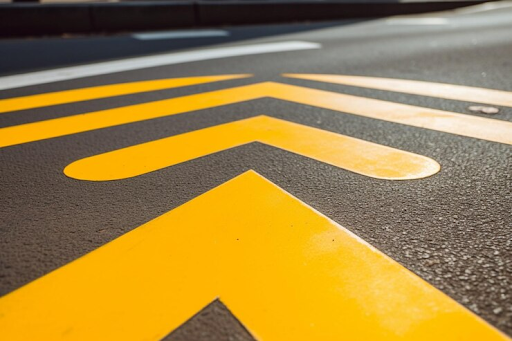
Chevron road markings are repeated angled lines arranged in a V-shaped or herringbone pattern to guide traffic around areas outside the normal travel path. The meaning of chevron road markings is to help drivers recognize and navigate around certain medians, islands, gore areas, lane divisions, and roadway obstructions.
Their larger painted pattern makes these areas more noticeable than a standard lane line alone. Chevron pavement markings should not be confused with roadside chevron signs, which warn drivers about changes in road alignment, such as sharp curves.
How Should Drivers Respond to Chevron Patterns?
Drivers should respond to chevron patterns by remaining within the designated travel lane and following the surrounding traffic controls. Chevron markings on the road help identify the intended path around a marked area, but drivers should also consider nearby lane lines, arrows, signs, and signals.
Drivers should:
- Remain within the designated travel lane.
- Follow directional arrows and boundary lines.
- Keep clear of areas identified as non-driving space.
- Follow nearby traffic signs and signals.
- Adjust speed when approaching a changing roadway layout.
The legal requirements depend on the surrounding pavement lines, signs, signals, and applicable road rules. Drivers should follow the complete traffic control arrangement rather than interpreting one pavement marking in isolation.
Where Are Chevron Patterns Used?
Chevron patterns are used where drivers need clear guidance around a defined area or through a changing traffic layout. Common locations include gore areas, median approaches, painted islands, fixed obstructions, divided entrances, private roads, and large parking facilities.
| Location | Main Purpose | Expected Driver Action |
| Gore area | Separate merging or diverging traffic | Remain in the selected lane |
| Median approach | Define pavement around a median | Follow the travel lane around it |
| Fixed obstruction | Direct vehicles away from an object | Follow the marked boundary |
| Commercial entrance | Organize incoming and outgoing traffic | Follow arrows and lane lines |
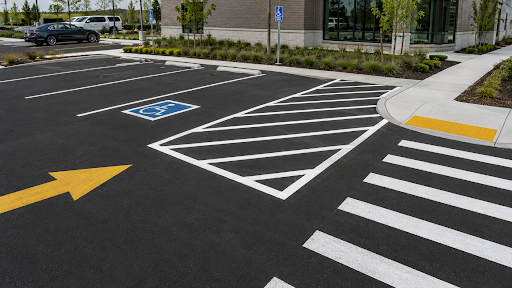
On private property, parking lot line painting can coordinate chevrons with parking stalls, loading areas, fire routes, pedestrian crossings, and directional arrows.
Gore Areas and Lane Divisions
Chevron patterns in gore areas and lane divisions help drivers recognize where traffic streams separate or come together. These areas are common near ramps, entrances, exits, and other locations where drivers must choose or maintain a specific travel path.
Clear pavement markings make the intended route easier to recognize and can discourage abrupt lane changes where traffic is merging or diverging.
Medians, Islands, and Obstructions
Chevrons around medians, islands, and obstructions help show drivers which areas are outside the normal travel lane. These roadway features may separate traffic movements, organize turns, or create space around fixed objects.
The painted pattern reinforces nearby boundary lines and guides approaching vehicles around the defined area.
How Do Colour and Pattern Affect Chevron Markings?
Colour and pattern affect how drivers interpret the direction and purpose of pavement markings. Ontario pavement marking guidance distinguishes white herringbone or chevron patterns from yellow diagonal markings based on the traffic arrangement.
- White chevron road markings may be used where traffic can pass on both sides of an obstruction.
- Yellow diagonal markings may be used where traffic is directed to pass to the right of an obstruction.
- White pavement lines generally separate traffic travelling in the same direction.
- Yellow pavement lines generally separate opposing traffic movements.
The surrounding lines, arrows, signs, and roadway layout must also be considered. Property owners can learn more about how these elements work together in this pavement markings guide.
How Are Chevron Patterns Planned and Applied?
Chevron patterns are planned and applied by first reviewing traffic movement, confirming the required layout, and preparing the pavement for marking. Accurate measurements, proper orientation, and suitable materials help create a pattern that works with the rest of the traffic control system.
1. Review Traffic Movement
Traffic movement is reviewed to determine how vehicles and pedestrians use the area before the layout is marked. The contractor considers vehicle direction, turns, pedestrian routes, sightlines, entrances, and exits.
Commercial and industrial properties may also require consideration of trucks, loading activity, and emergency vehicles.
2. Confirm the Layout
The layout must establish where the markings will be placed and how they will relate to the surrounding traffic controls. Public-road markings should follow the requirements and approved drawings of the responsible road authority, while private projects should consider site plans, fire access, accessibility requirements, and existing traffic controls.
The contractor confirms the location, angle, spacing, colour, boundaries, and orientation before painting begins.
3. Prepare the Surface
Surface preparation helps the marking material bond properly and remain visible after application. The pavement should be dry, clean, and free from loose dirt, salt, oil, and debris before painting begins.
Conflicting or obsolete markings may also need to be removed or covered before the new layout is installed.
4. Measure and Paint
Accurate measuring and painting help ensure the pattern follows the specified dimensions and direction. The contractor lays out the boundaries, taper, spacing, angles, and orientation before applying the marking material.
The selected material should also suit the traffic level, surface condition, weather exposure, and maintenance requirements of the site.
5. Inspect the Finished Work
The finished work should be inspected to confirm that the pattern is aligned, visible, and consistent with surrounding pavement markings. Coverage, contrast, boundaries, and connections with nearby lines should all be checked before the area reopens.
Traffic should remain clear until the material has dried or cured as required.
What Are the Benefits and Limitations of Chevron Patterns?
Chevron patterns provide a highly visible way to guide vehicles around areas outside the normal travel path, but their performance depends on correct placement and continued visibility. Road chevron markings can improve traffic organization without requiring a raised divider, although weather, wear, and poor maintenance can reduce their effectiveness.
Unlike arrows, lane lines, or roadside chevron signs, painted chevrons primarily emphasize the shape and boundaries of a defined non-travel area.
Advantages
Chevron patterns offer several practical benefits where drivers need clear visual guidance around a defined area.
- Create a large visual cue for approaching drivers.
- Reinforce nearby lane boundaries and arrows.
- Help organize traffic without requiring a raised divider.
- Can be incorporated into existing paved areas.
- Make complex lane layouts easier to recognize.
Limitations
Chevron patterns also have limitations because their effectiveness depends on the markings remaining visible and consistent with the surrounding layout.
- Snow and ice can cover pavement markings.
- Dirt and road salt can reduce contrast.
- Snowplows and vehicle traffic can wear the paint.
- Poor lighting can reduce nighttime visibility.
- Incorrect or outdated layouts can create conflicting instructions.
Why Do Visibility and Maintenance Matter in Ontario?
Visibility and maintenance matter in Ontario because winter weather, traffic, and pavement work can make chevron patterns harder to see or understand. Snow, road salt, freeze-thaw cycles, tire wear, and snowplow activity can gradually reduce the clarity of painted markings.
Regular inspections help identify fading, damage, or conflicting markings before they become difficult for drivers to interpret.
Inspect chevron areas for:
- Faded or missing sections
- Weak contrast against the pavement
- Snowplow damage
- Salt, dirt, or debris buildup
- Cracks through the painted pattern
- Conflicts after paving or sealcoating
- Poor visibility under vehicle headlights
Suitable reflective road paint can improve nighttime recognition where specifications call for retroreflective materials. Correct yellow line placement can also help distinguish opposing traffic and clarify approaches to roadway obstructions.
When Should a Property Owner Hire a Professional?
A property owner should consider professional help when markings are faded, traffic movement is confusing, or site changes have created conflicting vehicle and pedestrian routes. An experienced contractor can assess the layout, prepare the pavement, and apply markings that suit the approved design and site conditions.
Consider arranging an assessment when:
- A parking area is being redesigned.
- A median or painted island is being added.
- Drivers regularly enter areas intended to remain clear.
- Existing markings have faded or become difficult to understand.
- New paving has covered the previous layout.
- Loading, parking, or pedestrian routes have changed.
- Existing lines conflict with a new traffic pattern.
Commercial line painting can integrate chevrons with arrows, crossings, parking stalls, loading zones, fire routes, and other markings to create a consistent traffic layout.
Clear Chevron Markings for Safer Ontario Roads
Clear, properly maintained chevron road markings help drivers recognize areas outside the normal travel path and navigate around medians, islands, gore areas, and roadway obstructions. Accurate layout, suitable materials, good visibility, and regular maintenance all contribute to markings that remain easy to understand.
Northern Element Contractors provides line painting and marking services for commercial, industrial, municipal, institutional, and residential properties across Ontario. Contact the team at +1 647 922 0400 or info@northernelementcontractors.ca to request a site visit and free quote.