When deciding what colour parking lot lines should be, the choice should depend on the purpose of each marking, pavement contrast, visibility, traffic flow, and any applicable local requirements. White is commonly used for standard parking bays, while colours such as yellow, blue, red, green, and black can help identify caution areas, accessible spaces, restricted zones, specialist parking, or obsolete markings when used consistently.
The right parking lot colour system can make spaces easier to recognize, reduce driver confusion, and support safer movement for pedestrians and vehicles. Understanding how colours are commonly used can help property managers plan a clear, consistent layout before arranging a parking lot line painting service.
Key Takeaways
- White is commonly used for standard parking stalls on dark asphalt.
- Yellow can help identify selected traffic-control or caution areas.
- Accessible parking requires more than blue pavement paint alone.
- Red and green should follow applicable site or municipal requirements.
- Obsolete markings should be removed or covered before repainting.
What Colour Should Parking Lot Lines Be in Ontario?
In Ontario, what colour should parking lot lines be depends on the purpose of each marking, pavement contrast, and the requirements that apply to the property. White is commonly used for regular stalls, while other colours may help identify specific traffic, accessibility, or operational functions.
Common colour considerations include:
- White parking lines: Commonly used for standard parking stalls and other general markings.
- White roadway lines: Typically separate traffic travelling in the same direction.
- Yellow roadway lines: Typically separate opposing traffic.
- Yellow parking lot markings: May be used for selected traffic-control, separation, loading, or caution areas.
- Specialty colours: Blue, red, green, or other colours may identify designated functions when supported by the site layout, signs, or applicable requirements.
- Site requirements: Approved plans, municipal requirements, accessibility standards, fire routes, and property-specific needs should be considered before a colour system is finalized.
A consistent colour system should make parking stalls, drive aisles, entrances, crossings, and restricted areas easy to recognize.
Does Ontario Have One Parking Lot Colour Code?
Ontario does not have one parking lot colour code that determines every marking on every private property. Requirements can vary by municipality, property type, approved site plan, accessible parking obligations, fire-route designation, and the intended use of each area.
Roadway conventions can provide useful guidance, but they should not be treated as a universal standard for private parking lots. Property owners should confirm applicable requirements before assigning colours to accessible spaces, fire routes, loading zones, EV spaces, or other designated areas.
What Are the Common Uses for Different Parking Lot Colours?
Different parking lot colours can help distinguish standard parking from traffic controls and specialty areas. Each colour should have a clear purpose and remain easy to recognize in poor lighting, wet weather, and winter conditions.
| Line Colour | Common Application | Important Consideration |
| White | Standard parking stalls, arrows, stop lines, and pedestrian boundaries | Provides strong contrast on dark asphalt and is familiar to drivers |
| Yellow | Traffic separation, caution areas, loading controls, and selected restricted areas | Should have a consistent purpose throughout the property |
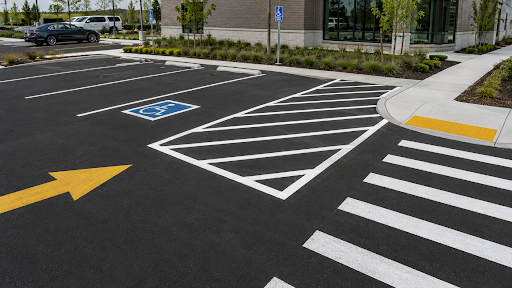
| Blue | Supplemental identification for accessible parking on some properties | Blue paint alone does not make an accessible space compliant |
| Red | Site-specific fire-route or no-stopping emphasis where approved or required | Confirm municipal, fire-route, and approved site-plan requirements |
| Green | EV, bicycle, pickup, or other specialty areas where adopted | Support the colour with symbols, wording, or signs |
| Black | Covering obsolete markings on dark pavement | Old lines should not remain visible enough to confuse drivers |
How Are White and Yellow Parking Lot Markings Commonly Used?
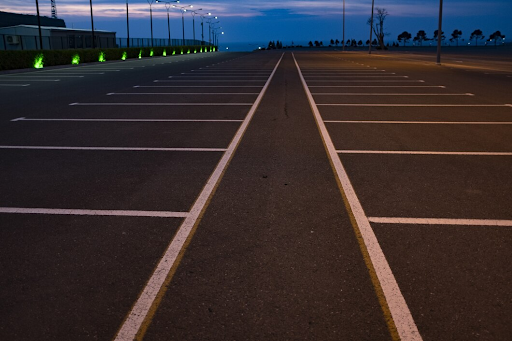
White is commonly used for standard parking stalls and general markings on dark asphalt, while yellow may identify selected traffic-separation, caution, loading, or control areas. Keeping these uses consistent helps drivers distinguish regular parking from areas that require additional attention.
The same colour should not be assigned to unrelated functions across the property. A consistent system makes the layout easier to understand and maintain.
How Is Blue Used for Accessible Parking?
Blue may provide supplemental visual identification for accessible parking, but blue pavement paint alone does not make a space compliant. Accessible parking layouts may also need to meet applicable requirements for dimensions, access aisles, pavement markings, signage, and accessible routes.
Property owners should confirm the complete accessible parking design before deciding how blue will be incorporated into the layout.
How Are Red and Green Used for Specialty Areas?
Red and green may identify specialty areas when their purpose is supported by the approved layout, signage, or local requirements. Red may be associated with certain fire-route or no-stopping areas, while green may be used for EV charging, bicycle facilities, pickup zones, or other designated uses.
Neither colour should be assumed to have one meaning on every Ontario property. Signs, symbols, or pavement wording can provide additional clarification.
Why Is Black Used Over Old Parking Lot Lines?
Black can help cover obsolete markings on dark asphalt when a parking or traffic layout changes. Masking outdated lines prevents faded markings from competing with the new design and directing drivers toward old stalls or travel paths.
The new layout should remain clearly distinguishable from previous markings.
How Should Property Owners Choose Parking Lot Line Colours?
Property owners should choose parking lot line colours based on the purpose of each area, pavement contrast, applicable requirements, and how vehicles and pedestrians move through the property. Starting with the site layout helps assign each colour a clear function and reduces unnecessary or conflicting markings.
1. Confirm Site Requirements
Site requirements should be reviewed before colours are assigned. Check approved plans and applicable requirements for accessible parking, fire routes, loading areas, pedestrian routes, and other designated spaces.
Municipal requirements should also be confirmed where they apply.
2. Map Traffic and Pedestrian Movement
Traffic and pedestrian routes should be mapped to identify where markings need to provide the clearest guidance. Review entrances, exits, drive aisles, turns, crossings, loading areas, delivery routes, and emergency access.
Pay particular attention to areas where vehicles and pedestrians may cross paths.
3. Select the Main Stall Colour
The main stall colour should provide strong contrast against the pavement and remain easy for drivers to recognize. White is commonly suitable for standard parking stalls on dark asphalt.
Keep the base colour consistent unless another marking serves a specific function.
4. Assign Specialty Colours Carefully
Specialty colours should be added only when they help distinguish a specific area or function. Each additional colour should have one clear meaning across the property.
Avoid decorative combinations that compete with safety or directional markings.
5. Support Colours With Symbols and Signs
Symbols and signs should support colours when drivers need additional information. Arrows, pavement wording, accessibility symbols, regulatory signs, and directional signs can make the intended use clearer.
Colour should not be expected to communicate every instruction on its own.
6. Check Visibility
Visibility should be reviewed under the conditions drivers are likely to experience. Check markings during daylight, low light, wet conditions, and in areas affected by glare or shadows.
Parked vehicles, landscaping, curbs, or other features should not hide important symbols or directional markings.
7. Document the Layout
A current marking plan should be kept for future repainting and maintenance. Documentation helps contractors reproduce the intended layout instead of relying on worn or partially visible lines.
When deciding what colour should parking lot lines be, compare the proposed layout with existing markings so obsolete lines do not remain visible.
What Are the Best Practices for Visibility and Maintenance?
The best practices for parking lot visibility and maintenance are to maintain strong pavement contrast, use suitable marking materials, inspect lines regularly, and repaint them before they become difficult to see. These steps help markings remain clear despite traffic, rain, dirt, snow clearing, and Ontario’s freeze-thaw cycles.
Property managers should:
- Use fewer colours and give each one a clear purpose.
- Avoid decorative combinations that compete with safety markings.
- Place directional arrows before drivers reach decision points.
- Keep access aisles, crossings, and fire routes clear.
- Inspect markings after winter and before busy seasons.
- Repaint when lines become difficult to recognize.
- Check for obsolete markings showing through the current layout.
Inspect the property from a driver’s eye level as well as from close range. Parked vehicles, curves, glare, shadows, and poor lighting can hide markings that appear clear when viewed from above.
Properties with roadway-style traffic layouts may also benefit from professional road marking services and a clearer understanding of common pavement marking meanings.
Are Simple or Multicolour Parking Lot Layouts Better?
Simple colour systems are usually easier for visitors to understand and for property owners to maintain, while multicolour layouts can help organize properties with several specialty zones. The better choice depends on whether each additional colour solves a genuine navigation, accessibility, safety, or operational need.
Advantages of a Simple Layout
A simple layout reduces the number of visual messages drivers need to interpret and makes future maintenance easier.
- Easier for visitors to understand
- Fewer colours to maintain
- More consistent appearance
- Lower risk of conflicting markings
Advantages of a Multicolour Layout
A multicolour layout can help larger or more complex properties distinguish specialty areas when every colour has a defined purpose.
- Makes specialty zones easier to identify
- Separates different operational areas
- Supports more complex parking layouts
- Reinforces pavement symbols and signs
Additional colours also require more materials, maintenance, and accurate layout records. Add a specialty colour only when it improves clarity or serves a defined site function.
Get Clear, Consistent Parking Lot Markings
A well-planned colour system can make parking areas easier to navigate, improve visibility, and support safer movement for drivers and pedestrians. The right layout should consider pavement contrast, traffic flow, accessibility, approved plans, local requirements, and long-term maintenance.
Northern Element Contractors provides parking lot and pavement marking services for commercial, industrial, municipal, institutional, and residential properties across Ontario. Call +1 (647) 922 0400 or email info@northernelementcontractors.ca to request a site review and quote.