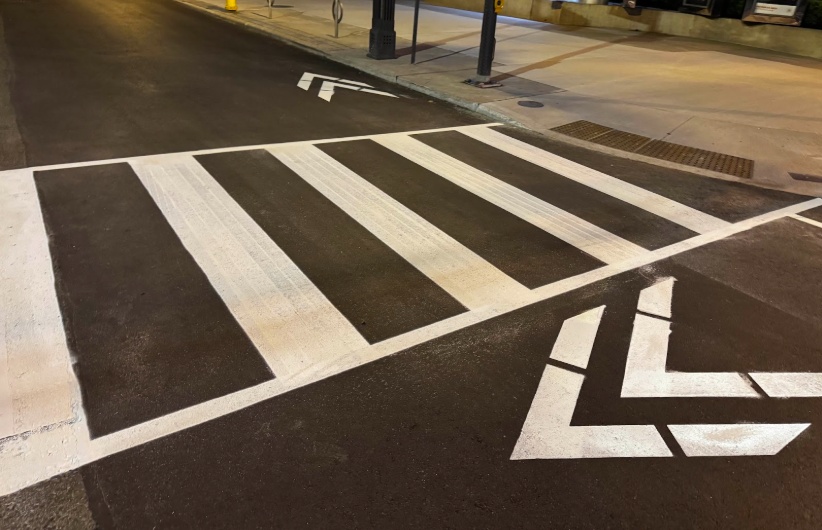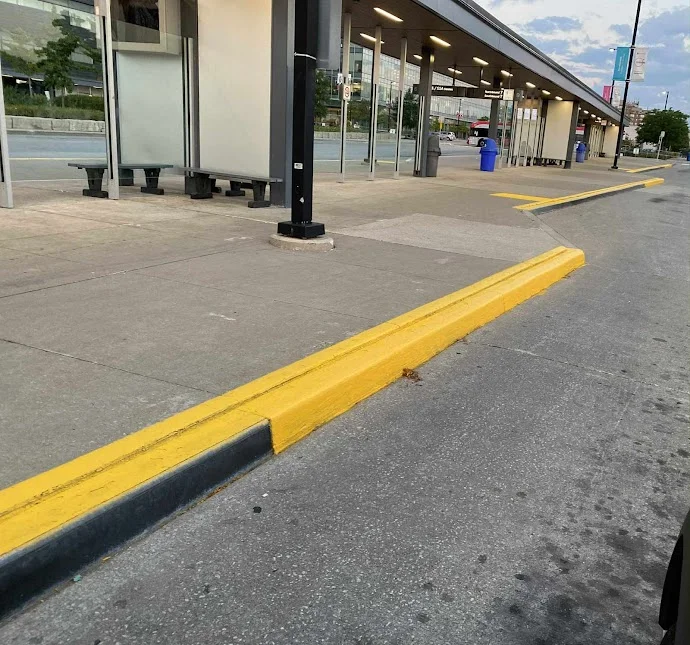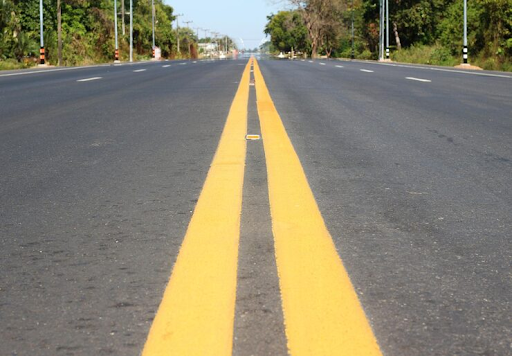
Roads, parking lots, and commercial properties rely on clear pavement markings to guide drivers and pedestrians safely, especially at night or during adverse weather. Reflective line paint improves nighttime visibility by using specialized coatings and reflective glass beads that return vehicle headlights toward drivers, helping road markings remain easier to see in low-light environments.
Faded or poorly visible markings can increase confusion, reduce reaction time, and create safety risks on roads and high-traffic properties. Expert line painting services help maintain clearer traffic direction, support safer vehicle movement, and improve pavement visibility across commercial, industrial, and municipal spaces.
Key Takeaways
- Reflective markings help drivers see lanes, arrows, and crossings more clearly at night.
- Glass beads create retroreflectivity by reflecting headlights toward drivers.
- Reflective systems help maintain pavement visibility during rain, fog, and snow.
- Regular maintenance helps markings remain effective and compliant.
- Professional installation improves paint performance and long-term pavement clarity.
What Is Reflective Line Paint?
Reflective line paint is a traffic marking material designed to improve pavement visibility during low-light and wet weather conditions. It combines traffic paint with reflective glass beads that help road markings appear brighter when vehicle headlights shine on them.
This type of marking is commonly used on:
- Municipal roads
- Highways
- Parking lots
- Warehouse floors
- School zones
- Pedestrian crossings
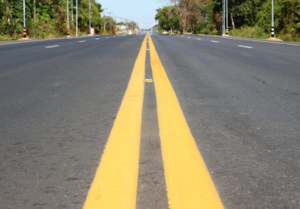
Reflective systems help drivers identify lane boundaries, turning lanes, stop bars, pedestrian crossings, and hazard areas more easily after dark.
How Do Reflective Pavement Markings Work?
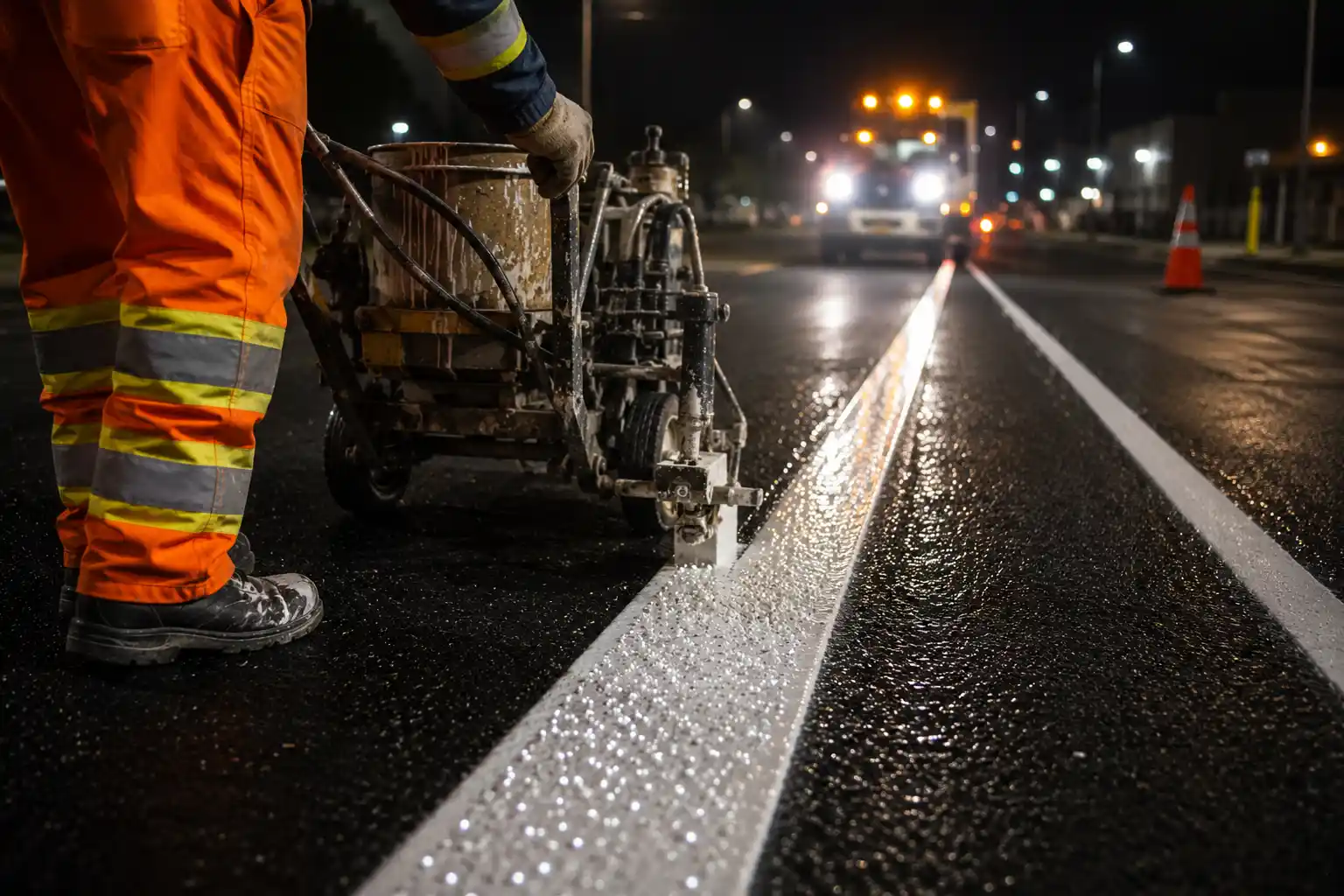
Reflective coatings work by using tiny glass beads embedded in the paint surface. When headlights hit the markings, the beads reflect light toward the driver, helping the lines appear brighter and easier to follow.
The reflective beads are partially embedded in the paint surface so they can properly capture and reflect vehicle headlights. This process is called retroreflectivity, which means light is returned toward its source instead of scattering in multiple directions.
The Role of Glass Beads
Glass beads are one of the most important components of reflective line marking paint because they improve visibility during:
- Night driving
- Rainfall
- Snow conditions
- Foggy weather
- Low-light environments
Why Surface Preparation Matters
One of the most common mistakes property owners make is assuming the paint alone determines performance. In reality, surface preparation plays a major role in how well reflective markings perform over time.
Oil, dirt, moisture, and damaged pavement can reduce adhesion and shorten the lifespan of the markings. Experienced contractors typically:
- Clean the pavement thoroughly
- Remove debris and contaminants
- Repair damaged surfaces if necessary
- Apply the paint evenly
- Broadcast reflective beads while the paint remains wet
This process helps create more consistent and longer-lasting reflective markings.
Why Do Reflective Pavement Markings Improve Road Safety?
Reflective pavement markings help drivers react faster and stay within traffic lanes during low visibility conditions. Clear markings improve navigation and reduce uncertainty on roads, parking lots, and industrial properties with regular vehicle movement.
Better Night Visibility
Night driving reduces visibility, depth perception, and reaction time. Reflective road line marking paint helps compensate for these challenges by making lane markings, curves, and directional arrows easier to identify.
Drivers can more easily see:
- Lane divisions
- Merge points
- Stop lines
- Bicycle lanes
- Crosswalks
Clearer markings also reduce hesitation and help drivers navigate unfamiliar roads more safely.
Improved Wet Weather Performance
Rainwater on pavement can make standard traffic paint harder to see. Reflective systems designed for wet weather conditions help drivers maintain clearer lane visibility when headlights reflect off wet pavement.
Many municipalities prioritize reflective markings in:
- School zones
- Major intersections
- Highway lanes
- Parking facilities
- Industrial loading areas
What Types of Reflective Pavement Markings Are Available?
Different reflective systems are used depending on traffic volume, weather exposure, and pavement conditions.
| Type | Common Use | Main Benefit |
| Water-based reflective paint | Parking lots and municipal roads | Lower emissions |
| Thermoplastic markings | High traffic roads | Longer lifespan |
| Epoxy reflective coatings | Industrial facilities | Strong adhesion |
| MMA markings | Cold weather areas | Faster curing |
Water-Based Reflective Paint
Water-based systems are commonly used for parking lots and municipal roads because they dry quickly and produce lower emissions.
Thermoplastic Reflective Markings
Thermoplastic markings are commonly used on busy roads because they provide thicker and longer-lasting pavement markings.
Epoxy Reflective Systems
Epoxy coatings are often used in industrial facilities because they resist heavy equipment wear and surface damage.
How Do Reflective Markings Compare to Standard Traffic Paint?
Reflective systems provide stronger nighttime visibility than standard traffic paint because they use reflective beads to return light toward drivers.
| Feature | Reflective Paint | Standard Paint |
| Night visibility | Higher | Lower |
| Wet weather visibility | Better | Limited |
| Safety performance | Stronger | Moderate |
| Maintenance frequency | Lower | Higher |
Although reflective systems may cost more initially, they often provide better long-term value because they improve pavement clarity and may reduce repainting frequency.
Where Are Reflective Pavement Markings Commonly Used?
Reflective markings are used across both public roads and private properties to improve traffic organization and safety.
Municipal Roads and Highways
Road agencies use reflective road line paint to improve driver guidance through intersections, lane transitions, and curves.
Parking Lots
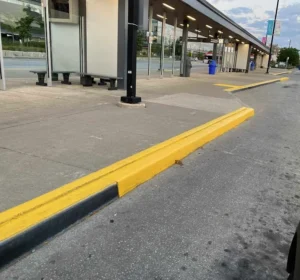
Parking lots require visible directional arrows, fire lanes, pedestrian crossings, and accessible parking spaces. Faded markings can increase confusion and create safety concerns for drivers and pedestrians.
Warehouses and Industrial Facilities
Reflective floor markings help separate pedestrian walkways, forklifts, loading areas, and restricted zones within industrial facilities.
How Long Does Reflective Line Paint Last?
Reflective pavement markings can last between one and five years, depending on traffic volume, weather exposure, pavement condition, and maintenance practices.
Several factors affect lifespan, including:
- Snow plough activity
- Heavy vehicle traffic
- UV exposure
- Road salt
- Surface condition
High-traffic roads usually require more frequent repainting than commercial parking lots or warehouse floors. Regular inspections help property owners identify fading or reduced reflectivity before markings become difficult to see.
Another common misconception is that reflective markings last indefinitely. Over time, traffic wear, snow removal, and environmental exposure gradually reduce reflectivity, making routine maintenance important for long-term performance.
Conclusion
Understanding how reflective line paint improves nighttime visibility and road safety helps property owners maintain safer roads, parking lots, and industrial spaces. Properly applied markings improve traffic guidance, reduce confusion during adverse weather, and support safer vehicle movement across busy properties.
Northern Element Contractors provides expert reflective line painting and pavement marking services across Ontario for roads, parking lots, industrial facilities, schools, and commercial properties. Contact Northern Element Contractors through the Contact Us page, call +1 (647) 922 0400, or email info@northernelementcontractors.ca to request a site assessment or quote today.