Fire lane marking requirements help property owners keep emergency access routes clear, visible, and ready for fire crews. In Ontario, these areas are often called fire routes or fire access routes, and they may require approved signs, pavement markings, curb paint, and regular maintenance.
Clear parking lot line painting helps drivers know where not to stop, park, load, or wait near building entrances, hydrants, and private access roads. Property owners need proper markings because faded paint, missing signs, blocked curbs, and snow buildup can delay emergency access and create compliance concerns.
Key Takeaways
- Fire lane marking requirements depend on local bylaws, approved site plans, and fire access route rules.
- Signs usually carry the enforceable no parking message, while paint improves driver visibility.
- Fire routes should stay clear for fire trucks, rescue vehicles, hoses, ladders, and building access.
- Curb paint, pavement text, arrows, and signs should work together as one clear layout.
- Annual reviews and timely repainting help prevent faded markings, blocked access, and driver confusion.
What Do Fire Lane Marking Requirements Include?
Fire lane marking requirements include route confirmation, approved signs, pavement text, curb markings, clear boundaries, and ongoing maintenance.
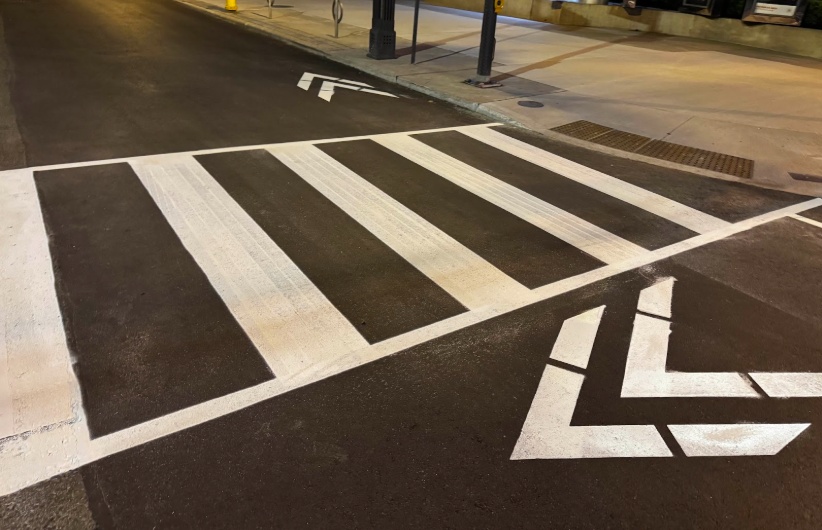
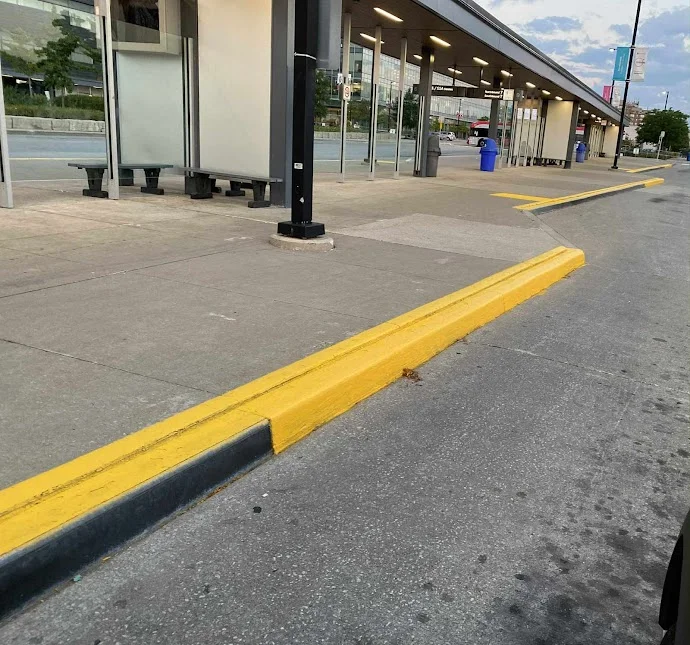
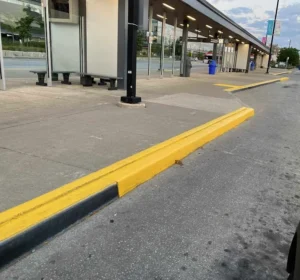
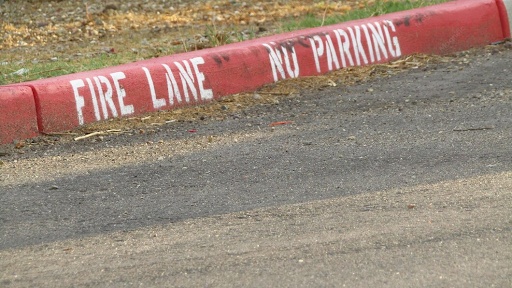
A marked route may include red curb paint, “Fire Route” wording, “No Parking” text, boundary lines, crosshatching, arrows, and visible vertical signs. These details help drivers recognize that the space is not for stopping, waiting, deliveries, or short-term parking.
How Do Fire Lane Marking Standards Apply in Ontario?
Fire lane marking standards in Ontario are usually tied to fire access routes, municipal bylaws, approved site plans, and local fire department direction. Property owners should confirm the required layout before repainting because sign wording, spacing, placement, and enforcement rules can vary by municipality.
The best practice is to review the site plan and local requirements before any paint is applied. Painting the wrong curb or drive aisle may make the property look organized, but it can still leave the approved emergency route unclear.
What Do Fire Lane Parking Restrictions Mean for Property Owners?
Fire lane parking restrictions mean drivers should not park, stop, wait, unload, or use the marked route as a temporary holding area unless a local rule allows it. The route must remain open for fire trucks, rescue vehicles, hoses, ladders, and access to building systems.
Property owners should make the restriction clear with readable signs, visible curb colour, clear pavement wording, and routine checks after snow clearing or parking lot changes.
What Most People Get Wrong
Many owners assume red paint alone makes an area compliant. Paint helps visibility, but it does not replace approved signs, correct route placement, or local bylaw requirements.
Use fire lane marking as a visual support for the approved fire route. It should help drivers understand the restriction quickly, not act as the only compliance measure.
Where Should Fire Lane Pavement Markings Be Installed?
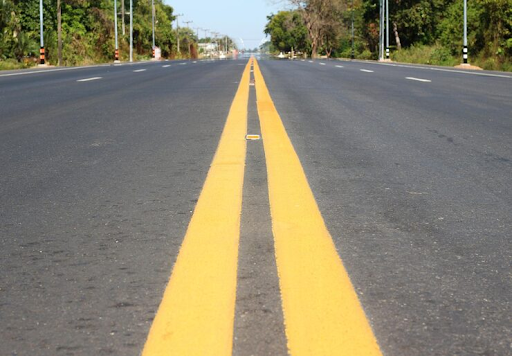
Fire lane pavement markings should be installed where drivers need quick visual direction, especially near building fronts, hydrants, fire department connections, emergency access lanes, school pickup areas, loading zones, and private roads. Placement should follow the approved route, not just the easiest curb to paint.
For larger properties, road marking services in Ontario can help connect emergency access with traffic flow, pedestrian movement, stall layouts, arrows, and other pavement markings.
| Marking Area | Why It Matters | Common Issue |
| Building frontage | Keeps fire trucks close to key entrances | Vehicles stop near doors |
| Hydrants and fire connections | Protects access to water and building systems | Snow, bins, or cars block access |
| Loading areas | Separates delivery activity from emergency access | Drivers use the route as a waiting zone |
| Private roads | Keeps emergency vehicle paths open | Faded paint makes restrictions unclear |
For more context, the pavement markings guide for road safety symbols explains how ground markings reduce guesswork in busy traffic areas.
What Steps Help Property Owners Meet Fire Lane Marking Requirements?
A marking project starts with route confirmation and ends with a visibility review. This process helps prevent wrong placement, poor paint adhesion, unclear wording, and markings that fade too quickly.
- Confirm the route. Check the approved site plan, municipal bylaw, and fire department notes.
- Inspect the surface. Look for loose asphalt, oil, moisture, dirt, flaking paint, cracks, or curb damage.
- Plan the layout. Decide where signs, curb paint, pavement text, arrows, and boundaries should appear.
- Prepare the pavement. Clean the surface so the paint can bond and remain visible longer.
- Apply the markings. Use clear lettering, strong contrast, consistent line width, and logical spacing.
- Review visibility. Walk and drive the property to confirm the message is readable from normal approach angles.
What Should Property Owners Check Before Repainting?
Property owners should check route approval, sign condition, surface quality, traffic flow, and seasonal wear before repainting. This prevents fresh paint from being placed over a layout that no longer matches the property’s access needs.
Before scheduling work, check:
- Whether the fire route still matches the approved site plan
- Whether signs are upright, visible, and facing approaching traffic
- Whether pavement words are readable from a driver’s normal view
- Whether snow removal has damaged curb paint or pavement text
- Whether delivery vehicles, bins, or tenant vehicles block the route
- Whether recent paving, construction, or layout changes affected access
This review is useful for shopping centres, apartment buildings, schools, hospitals, warehouses, municipal sites, and residential complexes with shared access roads.
How Often Should Fire Route Markings Be Reviewed and Repainted?
Fire route markings should be reviewed at least once a year and repainted when they become faded, chipped, covered, or hard to read. Ontario weather, road salt, snowplows, tire traffic, and UV exposure can reduce visibility in high-traffic areas.
Repainting may also be needed after resurfacing, sealcoating, curb repair, construction, tenant changes, or new traffic patterns. Waiting too long can make drivers treat the route like an open loading zone or temporary parking space.
Keep Emergency Access Clear and Compliant Year-Round
Fire route markings are more than painted curbs. They help protect emergency access, guide drivers, support parking control, and keep busy properties safer throughout the year.
Northern Element Contractors helps Ontario property owners maintain clear fire routes through line painting, pavement markings, curb painting, custom stencilling, and surface repainting services. If your fire route markings are faded, confusing, or ready for repainting, call +1 (647) 922-0400 or email info@northernelementcontractors.ca to request a site visit or free quote.